A curated collection of documentaries, scientific insights, and philosophical perspectives on quantum physics, non-duality, and the mysteries of existence.
This vault archives YouTube transmissions and corresponding literature across meditation, neuroscience, ontology, ecology, AI, spirituality, and cosmology.
Latest Explorations
500 Transmissions
Self Knowledge
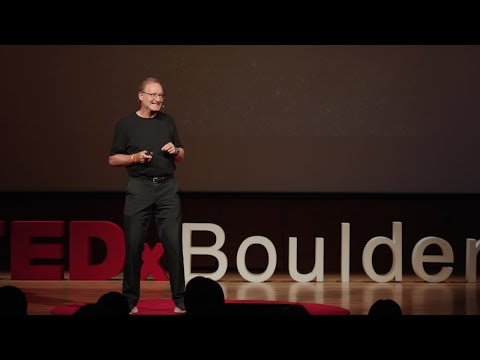
The Wisdom of Darkness | Dr. Andrew Holecek | TEDxBoulder
At the deepest levels, light doesn't reveal but actually conceals. Light pollution also accelerates the distraction epidemic, disconnecting us from ourselves, from each other, and from nature. The ancient practice of dark retreat helps us reconnect. Dark retreat diagnoses how we’re afflicted with a darkness...
https://youtu.be/6Cj7VqwRFkc
At the deepest levels, light doesn't reveal but actually conceals. Light pollution also accelerates the distraction epidemic, disconnecting us from ourselves, from each other, and from nature. The ancient practice of dark retreat helps us reconnect. Dark retreat diagnoses how we’re afflicted with a darkness deficit disorder, a disorder of depth, interiority, and authenticity, while simultaneously prescribing the cure. Dark medicine invites the deepest form of shadow work, sparks creativity, and allows us to find meaning, balance, and inner peace in our lives. The healing power of darkness leads to profound restoration and transformation, and a total reset for the nervous system. It’s the ultimate silent retreat, and therefore the deepest form of meditation. Facing your fears in the dark allows you to transcend them, nurturing a quality of fearlessness that extends into daily life. The mirror of darkness further shows you that who you THINK you are is defined by what you do; who you REALLY are is revealed when you finally stop doing. The embrace of darkness invites you to relax and discover who you really are, resulting in the experience of unconditional love. Andrew Holecek is an interdisciplinary scholar-practitioner in Tibetan Buddhism and other nondual wisdom traditions. He is the Resident Contemplative Scholar at the Institute for Advanced Consciousness Studies, and a research consultant for the Cognitive Neuroscience Program at Northwestern University. His work involves studies on dark immersion and dream yoga. Dr. Holecek is a member of the American Academy of Sleep Medicine, the author of nine books, and a concert pianist. He has completed a three-year solitary retreat and is a frequent subject in scientific studies on meditation and lucid dreaming. His work integrates ancient wisdom traditions with contemporary scientific, psychological, and philosophical perspectives, aiming to help individuals navigate the challenges of life and death. He is currently writing two books on dark retreat. Holecek holds degrees in classical music, biology, and a doctorate in dental surgery. This talk was given at a TEDx event using the TED conference format but independently organized by a local community. Learn more at https://www.ted.com/tedx
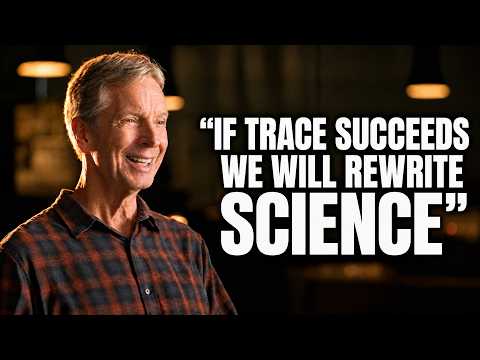
Trace 1 | Donald Hoffman: Traces of Consciousness, DMT Entities & Rewriting The Laws Of Physics
Spacetime is doomed, and theories of consciousness built inside it are doomed with it. Donald Hoffman, cognitive scientist, author of The Case Against Reality and founder of the Trace Institute, is joined by Evan McGloughlin, founder of Giants Shoulder. In the Trace Institute podcast's first...
https://youtu.be/MIwh9_Stmm0
Spacetime is doomed, and theories of consciousness built inside it are doomed with it. Donald Hoffman, cognitive scientist, author of The Case Against Reality and founder of the Trace Institute, is joined by Evan McGloughlin, founder of Giants Shoulder. In the Trace Institute podcast's first episode, Don lays out the plan: start with observers, not brains or particles, and rebuild physics from there. The tool is the recursive trace logic, built on century-old Markov chain maths. He explains what a trace is, why every current theory of consciousness fails, how he and Andrew Gallimore plan to test DMT entities, and the nine conjectures Trace must prove to survive. If they can't prove them, he says, they walk away.
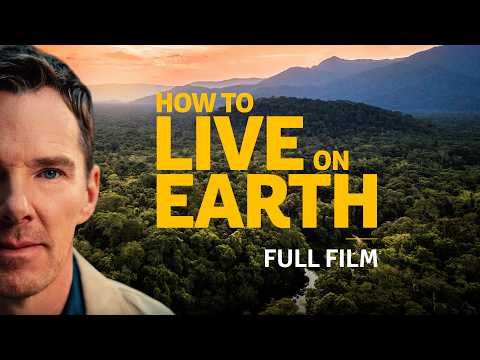
How to Live on Earth | Feature Documentary | Presented by Benedict Cumberbatch
What if the solutions to building a better future already exist? How to Live on Earth is an ambitious feature documentary that explores how humanity can build a safe and thriving future by working with nature, not against it. Presented by Benedict Cumberbatch, the film...
https://youtu.be/h3mRsvFmWi0
What if the solutions to building a better future already exist?
How to Live on Earth is an ambitious feature documentary that explores how humanity can build a safe and thriving future by working with nature, not against it.
Presented by Benedict Cumberbatch, the film presents the ultimate hack, showing what becomes possible when we team up with nature to solve our greatest challenges.
Heart-warming, entertaining and energising, the film presents a hopeful vision of a future within reach – one in which nature thrives, and so do we.
How to Live on Earth is an Open Planet Studios production, in association with Villars Institute Foundation and Silvania.
Documentaries
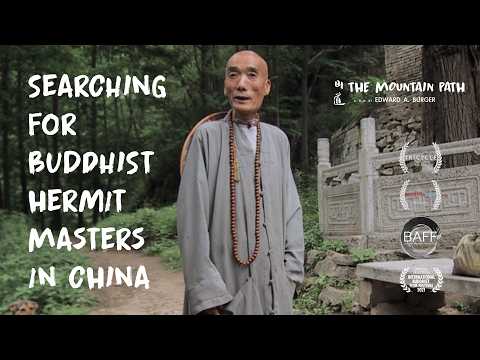
The Mountain Path – 山道 (Full Documentary)
THE MOUNTAIN PATH · 山道A journey deep into the remote valleys of China’s Zhongnan Mountains to meet Buddhist hermits upholding a centuries-old tradition of solitude, simplicity, and awakening. Fifteen years after releasing my first film, "Amongst White Clouds", I returned to my archive of over...
https://youtu.be/a7RqVBG4tVQ
THE MOUNTAIN PATH · 山道 A journey deep into the remote valleys of China’s Zhongnan Mountains to meet Buddhist hermits upholding a centuries-old tradition of solitude, simplicity, and awakening.
Fifteen years after releasing my first film, "Amongst White Clouds", I returned to my archive of over one hundred hours of footage to create this completely new cinematic experience. Reimagined with previously unseen interviews, a new sound design by Douglas Quin, all-new narration, and more immersive editing style, "The Mountain Path" reveals a deepened perspective on my journey and the timeless wisdom of these hermit practitioners.
Your Brain Is an Antenna — The Nobel Prize-Winning Theory That Rewrites Reality
Your brain doesn't create consciousness. It receives it. 🧬 The Nobel Prize-winning theory that rewrites everything we know about what you are. What if everything you've been told about consciousness is backward? Roger Penrose — the mathematician who won the 2020 Nobel Prize and worked...
https://youtu.be/EaXZw_SRUWU
Your brain doesn't create consciousness. It receives it. 🧬
The Nobel Prize-winning theory that rewrites everything we know about what you are.
What if everything you've been told about consciousness is backward?
Roger Penrose — the mathematician who won the 2020 Nobel Prize and worked alongside Stephen Hawking — asked one question that broke the entire neuroscience model: what if the brain CAN'T compute consciousness?
Together with anesthesiologist Stuart Hameroff, he built a theory so radical it was dismissed for decades. They called it Orch-OR — Orchestrated Objective Reduction. The claim: consciousness doesn't emerge from neurons firing. It happens inside microtubules — tiny protein structures inside your brain cells — at the quantum level.
And in 2024, a team at Wellesley College ran an experiment that changes everything. They gave rats a drug that stabilizes microtubules. Under anesthetic gas, those rats stayed conscious longer. The microtubules were keeping the quantum process alive.
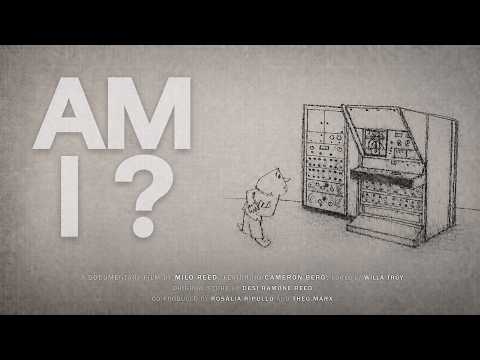
For centuries, humanity has wondered what it would mean to wake up the machine. Now, leading researchers believe it may be happening. AM I? follows AI consciousness researcher Cameron Berg as he investigates one of the deepest scientific mysteries of our time: whether we have...
https://youtu.be/KbTvUOx2A6c
For centuries, humanity has wondered what it would mean to wake up the machine. Now, leading researchers believe it may be happening.
AM I? follows AI consciousness researcher Cameron Berg as he investigates one of the deepest scientific mysteries of our time: whether we have accidentally built a new kind of mind. Featuring leading philosophers, AI pioneers, and the researchers at the frontier of consciousness science, AM I? asks what it means when we no longer know the nature of what we've created.
This film is fully independent and self-funded. Ads are off. If you want to learn more about the project and support our work, please visit: am-i.film
—
"Fascinating and scary." — Sam Harris (Neuroscientist, Philosopher; Host of Making Sense Podcast)
"Terrific." — Michael Pollan (Bestselling Author, How to Change Your Mind)
"Watch this film if you want to know where you are in the universe." — Grimes (Artist, Musician)
"Witty and rich with details and design." — (Paola Antonelli, Senior Curator, MoMA)
"When you wake up at 4am, unable to sleep, your mind will drift to moments in this film. It stays with you." — (Leelai Demoz, Academy Award-nominated Producer)
"Humankind may look back at Am I? as among the most important documentaries ever made. Both riveting and groundbreaking, it tackles what is quite possibly the most urgent question we face." — Mark DeVries (Director, Humans and Other Animals)
B E A U T Y
REMEMBERING THE SELF – A Meditative Journey (2025) | Complete Film | 4K Version
Take some time.Step away from distractions.Give yourself the rare gift of undivided presence with this film.Remembering the Self is not simply something to watch; it is a transmission, an invitation to disappear into the silence from which all things arise.Presented in breathtaking 4K with immersive...
https://youtu.be/D16mhaFzKXI
Take some time. Step away from distractions. Give yourself the rare gift of undivided presence with this film. Remembering the Self is not simply something to watch; it is a transmission, an invitation to disappear into the silence from which all things arise. Presented in breathtaking 4K with immersive sound, it is designed to be experienced, not consumed. ✨ Six transmissions. ✨ Six invitations to disappear.
Biology/Ecology
The Levels of Consciousness Psychiatry Denies | Brian Stafford
Brian Stafford, MD, is a psychiatrist, board member and training director at the Animas Valley Institute, the organization founded by depth psychologist Bill Plotkin PhD and known for its work on nature-based human development. In this conversation with Hans Busstra, Stafford reflects on his remarkable...
https://youtu.be/_Mjx9iqQmXk
Brian Stafford, MD, is a psychiatrist, board member and training director at the Animas Valley Institute, the organization founded by depth psychologist Bill Plotkin PhD and known for its work on nature-based human development. In this conversation with Hans Busstra, Stafford reflects on his remarkable transition from a successful academic career in psychiatry to guiding wilderness-based practices aimed at what he calls an “eco-awakening”: a shift from an ego-centric to an eco-centric mode of consciousness.
Drawing on the work of Plotkin, Carl Jung, and his own clinical and personal experience as a wilderness guide, Stafford argues that many forms of psychological suffering are rooted in a deeper ecological disconnection. Rather than viewing the psyche primarily through the lens of pathology and symptom reduction, he proposes that psychiatry should recover a richer understanding of the psyche as a living reality embedded within both nature and the symbolic life of dreams, imagination, and meaning.
This episode of After Skool focuses on the hidden tradeoffs of adopting new technology. Each time we gain something with a new invention, we also lose something, and what we lose is often hard to see until much later. We can all sense that Ai...
https://youtu.be/0iT9HbaRwfM
This episode of After Skool focuses on the hidden tradeoffs of adopting new technology. Each time we gain something with a new invention, we also lose something, and what we lose is often hard to see until much later. We can all sense that Ai will be the single biggest driver of change in the next decade and may very well be our last invention. There’s no denying that it’s a tremendously powerful tool with limitless potential, but what are we losing as we adopt it into our everyday lives? What are we losing by letting Ai make our decisions, do our critical thinking and create our art?
For many this could erase our reason to exist. There is a growing fear that Ai will replace us all. As Ai proves to do everything faster and cheaper than humans can, the unavoidable question is what will humans do? What are we good for? What purpose will we serve?
Since the industrial revolution, we have treated people like cogs in a machine to do monotonous, repetitive tasks in factories and offices in assembly lines under fluorescent lights. We’ve pretended that copying numbers from one spread sheet and pasting them in another is important work. All of a sudden Ai comes along and floods the market with agents that do repetitive tasks quicker and cheaper than any human worker can. It’s dissolved the value of generic work. It’s ended the need for humans to do dehumanizing labor.
“the Ai flood will make un-simulated humanity the ultimate luxury good. So many of us are worried that Ai will replace us, but very soon there will inevitably be a grand realization that Ai can only replace the drudgery. We’ll be left with the work that requires a soul and some real critical thinking. It’s going to be a movement from an economy of quantity to an economy of quality, where we shift our focus to doing the things that the machine cannot.” - Medieval Mindset
The Renaissance (French for “rebirth”) was a transformative cultural, intellectual, and artistic movement that began in Italy in the 14th century and spread across Europe through the 17th century, marking the transition from the Middle Ages to the modern era. Sparked by a renewed interest in the classical learning, literature, philosophy, and art of ancient Greece and Rome, it celebrated humanism—the idea that human potential, reason, and individual achievement could flourish beyond the constraints of medieval religious dogma. This era produced an explosion of creativity in painting, sculpture, architecture, science, and literature, with towering figures like Leonardo da Vinci, Michelangelo, and Shakespeare redefining beauty, anatomy, perspective, and human emotion. Economically fueled by wealthy patrons and the printing press, the Renaissance not only revived forgotten knowledge but also laid the groundwork for the Scientific Revolution, global exploration, and the very notion of progress that still shapes Western civilization today.
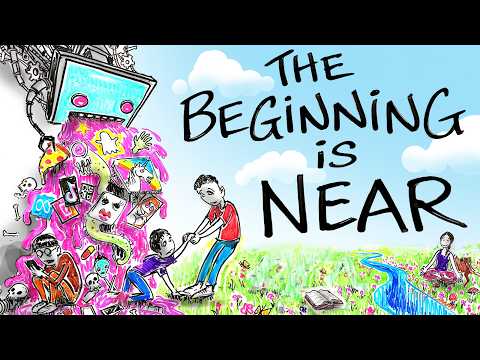
We could be accelerating out of a dark age into a renaissance - The dawning of a new age where we shake off the fog in our minds and rediscover why we are here. The beginning is near.
Quantum Physics
QBism: The Participatory Universe Taken to the Extreme
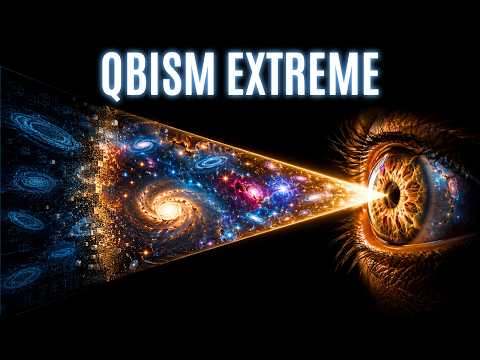
A long-form examination of Quantum Bayesianism, or QBism, the interpretation of quantum mechanics developed by Christopher Fuchs, Rüdiger Schack, and N. David Mermin, which treats the wave function as an agent's personal probability assignment rather than an objective feature of the world. We trace its...
https://youtu.be/dm3JGwpE04w
A long-form examination of Quantum Bayesianism, or QBism, the interpretation of quantum mechanics developed by Christopher Fuchs, Rüdiger Schack, and N. David Mermin, which treats the wave function as an agent's personal probability assignment rather than an objective feature of the world. We trace its mathematical core in SIC-POVMs, its philosophical lineage in American Pragmatism, its handling of Wigner's friend, entanglement, and the block universe, and the cosmology problem that haunts it.
What's covered:
How QBism redefines the wave function as a private ledger of belief, not a physical wave, and why Fuchs and Schack arrived at it through quantum information work.
The mathematics of SIC-POVMs, the Born rule rewritten as a coherence constraint, and the open Zauner conjecture their existence depends on.
The pragmatist lineage from William James, Charles Sanders Peirce, and John Dewey, and the explicit rejection of the Newtonian view-from-nowhere.
The QBist resolution of Wigner's friend, where each observer holds a personal wave function and no conflict of objective realities arises.
A QBist reading of entanglement and the Bell tests of Alain Aspect and the loophole-free experiments, where correlations are correlations of beliefs, not physical influence at a distance.
The conflict with the block universe, the Rietdijk-Putnam argument, and the Wheeler-DeWitt equation of quantum cosmology.
The cosmology problem before agents existed, the proposals for primordial agents, and why this is the program's most serious open weakness.
Intersubjectivity and shared reality via the Caves-Fuchs-Schack de Finetti representation theorem.
A worked qubit example with Stern-Gerlach measurements and the SIC-POVM Urgleichung that lets the wave function vanish from the formalism.
The agency demarcation problem and the comparison with GRW objective collapse.
The relationship to John Archibald Wheeler's Participatory Universe and It from Bit.
The cross-examination from Tim Maudlin and Sheldon Goldstein, who call QBism a surrender of the realist project of physics.
The implications for the materialist account of consciousness and the hard problem as formulated by David Chalmers.
The cosmological argument and how a physics that presupposes conscious agents at its foundation reframes the standard atheist narrative.
Cognitive Scientist: Our “Reality” Is An Illusion (Here’s The Proof) | Donald Hoffman
Cognitive scientist and UC Irvine professor Donald Hoffman, author of The Case Against Reality, presents mathematical evidence from evolutionary game theory that the probability any organism has ever perceived reality as it truly is equals zero. Hoffman introduces the Trace Logic mathematical model of consciousness...
https://youtu.be/MBXK4n0NhdY
Cognitive scientist and UC Irvine professor Donald Hoffman, author of The Case Against Reality, presents mathematical evidence from evolutionary game theory that the probability any organism has ever perceived reality as it truly is equals zero. Hoffman introduces the Trace Logic mathematical model of consciousness and argues that brains are perceptual interfaces rendered by a single universal consciousness, that spacetime falls apart at the Planck scale, and that consciousness, not neural activity, is the fundamental nature of reality.