A curated collection of documentaries, scientific insights, and philosophical perspectives on quantum physics, non-duality, and the mysteries of existence.
This vault archives YouTube transmissions and corresponding literature across meditation, neuroscience, ontology, ecology, AI, spirituality, and cosmology.
The Mathematical Boundary Between You And The Universe | Karl Friston On The Free Energy Principle
Sponsored by Consensus: the AI powered science search engine with access to 220+ million studies. Click: for a free trial of Consensus Pro and 30% discount on a yearly plan. Prof. Karl Friston is the most cited neuroscientist in the world, renowned for pioneering the...
https://youtu.be/kbs2ozkXGjI
Sponsored by Consensus: the AI powered science search engine with access to 220+ million studies. Click: https://get.consensus.app/essentia for a free trial of Consensus Pro and 30% discount on a yearly plan. Prof. Karl Friston is the most cited neuroscientist in the world, renowned for pioneering the framework of active inference and for developing the influential Free Energy Principle (FEP). In this conversation with Hans Busstra, Friston touches on the metaphysics of his FEP, which surprisingly points to non-dualism instead of materialism, as widely assumed. According to Friston, space and time, the self, and even the FEP itself are mere stories, useful fictions with real explanatory power, which do not give us direct access to the noumenal reality. Selected papers by Karl Friston: Friston, K. (2019). A free energy principle for a particular physics. arXiv preprint arXiv:1906.10184. https://arxiv.org/abs/1906.10184 Friston, K. (2010). The free-energy principle: a unified brain theory? Nature Reviews Neuroscience, 11(2), 127–138. https://www.nature.com/articles/... Friston, K. (2019). A free energy principle for a particular physics. arXiv preprint arXiv:1906.10184.https://arxiv.org/abs/1906.10184
Professor Steinberg explores the quantum mechanical implications of photons traveling through barriers and interacting with atoms. Curt Jaimungal examines the technical depth behind these phenomena, questioning common interpretations of faster-than-light travel, weak measurements, and the nature of time itself within a rigorous physics framework.
https://youtu.be/cOZ3Kto6NIc?is=-dg6PpLAiHyRLuj6
Professor Steinberg explores the quantum mechanical implications of photons traveling through barriers and interacting with atoms. Curt Jaimungal examines the technical depth behind these phenomena, questioning common interpretations of faster-than-light travel, weak measurements, and the nature of time itself within a rigorous physics framework.
Astronomy/ Cosmology
This Physicist (Unexpectedly) Derived Gravity from Information
What if gravity is just entropy in disguise? Professor Erik Verlinde joins me to argue that gravity isn't a fundamental force—it's thermodynamic, emerging from quantum information the way gas pressure emerges from molecules bouncing around. We explore why spacetime may be stitched together by entanglement,...
https://youtu.be/ilVImMHcr_g?si=Bbda1V2-X6P5ckLH
What if gravity is just entropy in disguise? Professor Erik Verlinde joins me to argue that gravity isn't a fundamental force—it's thermodynamic, emerging from quantum information the way gas pressure emerges from molecules bouncing around. We explore why spacetime may be stitched together by entanglement, and how dark energy and dark matter both pop out automatically without extra particles or parameters. Verlinde explains why the cosmological constant problem is a red herring, and why there may be no final theory of physics. When asked where the universe comes from, his answer is one word: chaos.
Astronomy/ Cosmology
The Physicist Who Proved Entropy = Gravity
What if gravity is not fundamental but emerges from quantum entanglement? In this episode, physicist Ted Jacobson reveals how Einstein’s equations can be derived from thermodynamic principles of the quantum vacuum, reshaping our understanding of space, time, and gravity itself.
https://youtu.be/3mhctWlXyV8?si=c6iZd_90JpXZW--R
What if gravity is not fundamental but emerges from quantum entanglement? In this episode, physicist Ted Jacobson reveals how Einstein’s equations can be derived from thermodynamic principles of the quantum vacuum, reshaping our understanding of space, time, and gravity itself.
Neuro-Science
A Neurosurgeon’s Proof of an Immortal Soul | Dr. Michael Egnor
“Neuroscientists who stand up and say ‘we have souls’ are few and far between,” says pediatric neurosurgeon Dr. Michael Egnor. “But when you look carefully at the neuroscience—the best neuroscience over the past century—it clearly points to the existence of the soul and to the...
https://youtu.be/BMnLl6M2Dio?si=y09DBFnokm-6-ZOU
“Neuroscientists who stand up and say ‘we have souls’ are few and far between,” says pediatric neurosurgeon Dr. Michael Egnor. “But when you look carefully at the neuroscience—the best neuroscience over the past century—it clearly points to the existence of the soul and to the existence of aspects of our mind that don't come from the brain.” Egnor himself started off as a materialist and atheist. But 40 years and more than 7,000 brain surgeries later, he concluded that reason and free will do not reside in the brain. In this episode, he reveals what he’s found. “Neuroscience is just fundamentally wrong in a lot of ways … because of the materialist bias in neuroscience. We can't get away from this machine analogy, [but] we're not machines, and we don't work like machines work. And there's overwhelming evidence in neuroscience for the existence of a soul,” he says. Dr. Egnor is a professor of neurosurgery and pediatrics at Stony Brook University, a senior fellow at the Discovery Institute, and the co-author of the book “The Immortal Mind: A Neurosurgeon's Case for the Existence of the Soul.”
Top Neuroscientist Demonstrates What’s Behind Reality
He was called “The Einstein of Brain Science.” A neuroscientist whose ideas quietly reshaped how we understand the mind, perception, and reality itself. In this talk, he doesn’t speculate. He demonstrates. What he shows challenges one of our deepest assumptions: that reality is simply out...
https://youtu.be/JIcnLX6mgXg
He was called “The Einstein of Brain Science.” A neuroscientist whose ideas quietly reshaped how we understand the mind, perception, and reality itself. In this talk, he doesn’t speculate. He demonstrates. What he shows challenges one of our deepest assumptions: that reality is simply out there, waiting to be perceived. Decades ahead of his time, Karl Pribram proposed a model of the brain so radical that it forced science to reconsider what perception actually is, and where reality truly comes from.
James Webb Just Revealed The True Scale of the Universe!
The James Webb Space Telescope is showing us something humanity has never seen before — not just distant galaxies, but the true scale of reality itself. What we once believed was a manageable universe has turned out to be vastly larger, far more crowded, and...
https://youtu.be/JPvmX5KWnIM
The James Webb Space Telescope is showing us something humanity has never seen before — not just distant galaxies, but the true scale of reality itself. What we once believed was a manageable universe has turned out to be vastly larger, far more crowded, and shaped by forces we barely understand. Webb has revealed an observable universe 93 billion light-years across, uncovered hundreds of thousands of galaxies in regions once thought empty, and detected massive structures forming when the universe was only a few hundred million years old. These discoveries challenge how fast galaxies should form, how black holes grow, and even how space itself expands. This video explores how Webb looks back in time, why much of the universe is permanently hidden beyond our cosmic horizon, and how dark matter and dark energy shape everything we can see. This isn’t just a bigger universe — it’s a different one.
Lectures
Megahertz Brain Waves, Microtubule Time Crystals, and the Physics of Consciousness | Stuart Hameroff
“Consciousness may not emerge from neurons firing — it may be the quantum music playing inside them.” At Deep Tech Week San Francisco 2025, Dr. Stuart Hameroff, anesthesiologist, professor, and co-creator of the Orch-OR theory of consciousness with Sir Roger Penrose, delivers a mind-bending exploration into the quantum physics of the brain — and why megahertz brain waves and microtubule time crystals could be the hidden heartbeat of awareness itself. In this talk, Hameroff reveals over 40 years of research...
“Consciousness may not emerge from neurons firing — it may be the quantum music playing inside them.” At Deep Tech Week San Francisco 2025, Dr. Stuart Hameroff, anesthesiologist, professor, and co-creator of the Orch-OR theory of consciousness with Sir Roger Penrose, delivers a mind-bending exploration into the quantum physics of the brain — and why megahertz brain waves and microtubule time crystals could be the hidden heartbeat of awareness itself. In this talk, Hameroff reveals over 40 years of research connecting neuroscience, quantum mechanics, and anesthesia — from the origins of life and cognition to the possibility of consciousness before biology itself. Drawing on experimental data from nanotechnology labs in India, EEG studies, and ultrasound brain stimulation, Hameroff shows that consciousness might operate across a hierarchy of frequencies — from hertz-level cortical oscillations to megahertz and terahertz vibrations deep inside neurons.
Here is Emergent Garden's thoughts on emergent complexity. I go through a tour of simple systems that produce unexpected complexity, and try to break down emergence into more general and useful ideas. We talk about snowflakes and ant colonies, cellular automata and universe simulations, and...
Here is Emergent Garden's thoughts on emergent complexity. I go through a tour of simple systems that produce unexpected complexity, and try to break down emergence into more general and useful ideas. We talk about snowflakes and ant colonies, cellular automata and universe simulations, and the many weird ideas of Stephen Wolfram. I also offer some advice for creating and encouraging emergent behavior. This video is important to me. Emergence is the most interesting thing in the universe.
Documentaries
The Highest Levels of Thinking | Why Society is Stuck at the bottom
Human civilization is built on pyramids. Not just the stone ones baked under the Egyptian sun, but invisible structures, hierarchies of thought, layers of meaning, and levels of thinking that range from the most basic impulses to the heights of true revelation. And yet, despite...
Human civilization is built on pyramids. Not just the stone ones baked under the Egyptian sun, but invisible structures, hierarchies of thought, layers of meaning, and levels of thinking that range from the most basic impulses to the heights of true revelation. And yet, despite the astonishing tools, knowledge, and information available to us today, most people never climb past the very first steps. In school, in politics, in culture, and especially online, the majority of society still operates at the lowest layers of thinking: remembering , or more accurately, simply regurgitating everything they’ve been told.
Health
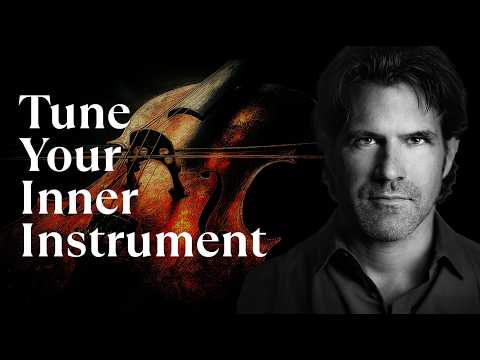
You’re Out of Tune (And It’s Making You Miserable)
What's the difference between changing yourself and changing the world? Only one of them actually works. In this wide-ranging conversation, Keith Martin-Smith and David Arrell diagnose the core pathology of contemporary life: we're living in an attainment culture that measures worth through accumulation—more status, more...
What's the difference between changing yourself and changing the world? Only one of them actually works. In this wide-ranging conversation, Keith Martin-Smith and David Arrell diagnose the core pathology of contemporary life: we're living in an attainment culture that measures worth through accumulation—more status, more recognition, more stuff—while starving the qualities that actually make life worth living. The result? Epidemic levels of anxiety, polarization, narcissism, and a quiet desperation that no amount of productivity hacks or self-optimization can touch. The alternative isn't another framework to add to your collection. It's a fundamental reorientation toward attunement culture—a shift from quantity to quality, from getting to becoming, from conquest to meaning. David lays out the architecture of this shift across three temporal dimensions: HEALTH (The Past): Most of us are operating from developmental anchors—unconscious wounds and reactive patterns that keep us stuck at earlier stages of maturity. When you criticize, control, or comply automatically, you're not responding to what's in front of you; you're responding from an old script. The work is to turn toward these patterns with curiosity, reclaim the energy locked there, and stop letting the past hijack your present. DEPTH (The Present): Your attention is under siege. Billions of dollars have been spent engineering super-normal stimuli to keep you distracted, metabolically aroused, and scrolling. But presence—the capacity to remain grounded when life gets turbulent—is the foundation of wisdom. Character and virtue aren't abstractions; they're your ability to tolerate weather without capsizing. The fruits of the spirit (love, joy, peace, patience, kindness, goodness, faithfulness, gentleness, self-control) emerge spontaneously when you create the conditions, like apples from a healthy tree. GROWTH (The Future): Beyond your current capacities are your leading edges—the places where you're stretching into new territory. Growth means tolerating the unknown, throwing aspirational grappling hooks into territory you can't yet see clearly, and expanding your container of authenticity. It's not about becoming someone else; it's about becoming more fully who you already are. Throughout the conversation, Keith and David return to a revolutionary foundation: dignity culture. Unlike respect (which must be earned), dignity simply is—every human being has equal claim to worth by virtue of being human. This creates common ground from which we can build toward higher ground. It dissolves the false choice between dominator hierarchies and victim narratives, between attainment Olympics and oppression Olympics. The examples are visceral: Martin Luther King Jr. didn't change America by attacking his enemies—he changed it by cultivating such depth of character that he could march from Selma without taking opposition personally. Lama Tsering Everest changed a room simply by walking into it. The power of alignment—when your intrapersonal, interpersonal, and cultural dimensions move in the same direction—is magnetic. The conversation offers practical wisdom for the current moment of cultural chaos: shift from grievance to gratitude, from entertainment to enrichment, from tribe of the chosen to tribe of the chosen ones you intentionally create. Track your attention. Practice humor. Grant dignity to yourself and others. Get your butterflies in formation. This isn't self-help. It's a blueprint for becoming the kind of person who can actually create change—not by trying to fix everyone else, but by doing the work that makes your very presence a form of influence.
Astronomy/ Cosmology
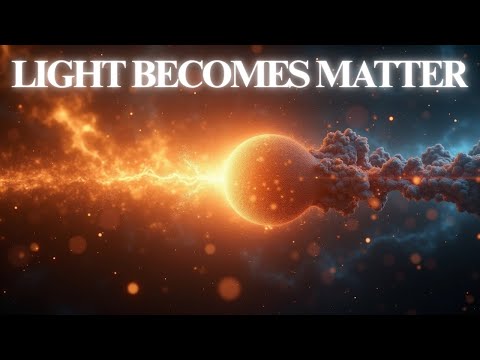
How Light Becomes Matter (and Back Again) | SLEEP SCIENCE STORIES
What if everything around you — every atom, every object, even you — once existed as pure light? In tonight’s Sleep Science Story, we explore one of the most mind-bending truths in physics: light can become matter, and matter can turn back into light. Relax...
What if everything around you — every atom, every object, even you — once existed as pure light? In tonight’s Sleep Science Story, we explore one of the most mind-bending truths in physics: light can become matter, and matter can turn back into light. Relax as we dive into the strange world of E=mc², particle creation, and the dance between energy and mass that shapes our universe. From the heart of stars to the vacuum of space, discover how the cosmos continuously transforms light into life.